



From TMS to the learning ecosystem: Filippo Cannavò discusses data governance and Instant Training
19 June 2026
Beyond compliance: Pay Transparency as a strategic lever HR | Report
1 July 2026
24 June 2026
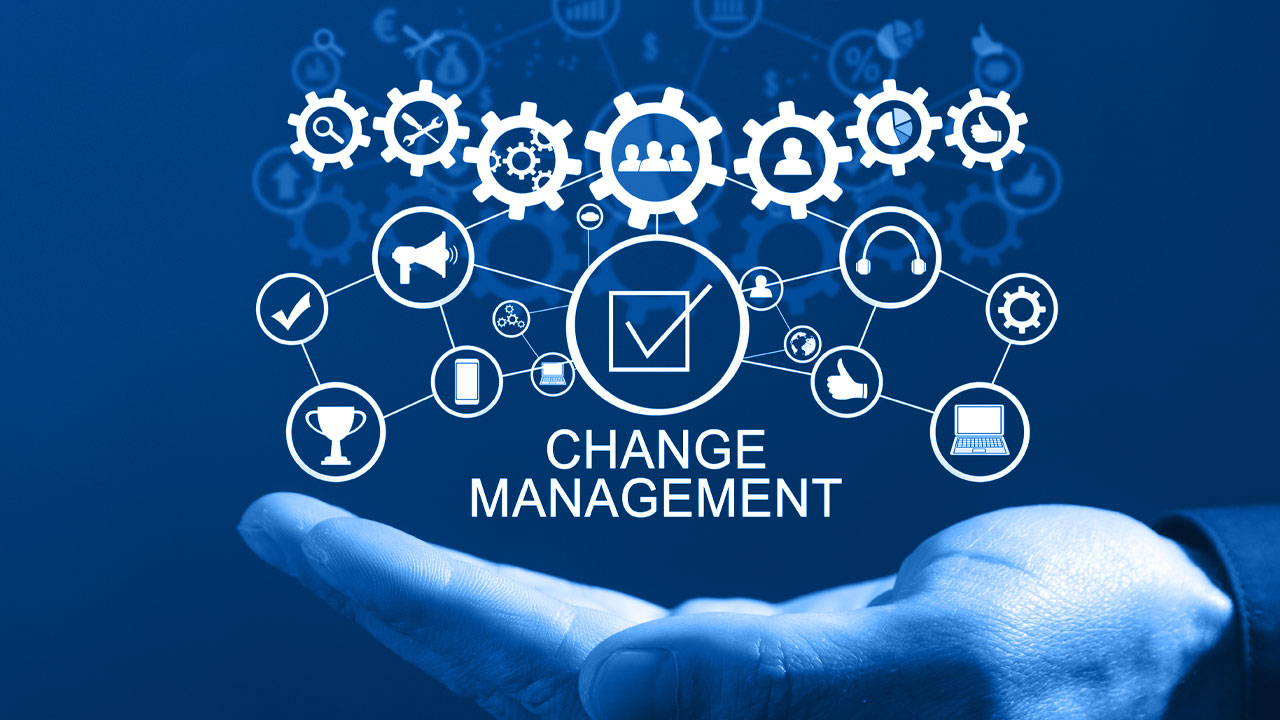
Strategic Change Management: processes, roles and incentives before the narrative
In recent years, the Change Management has become a structural component of major transformation programmes. In many complex projects, dedicated investment accounts for between 7% and 12% of the overall budget. This is therefore not an incidental expense, but a strategic lever which, if used effectively, can accelerate adoption and value creation. If misused, however, it risks becoming a significant cost with no return.
The problem is not change management in itself. The problem is the misunderstanding about what change really is.
The biggest misconception about change: confusing storytelling with implementation
In organisational practice, the change comes often reduced to a set of “soft” activities:
- internal communication,
- motivational workshops,
- launch events,
- inspirational videos,
- engagement campaigns.
For many people, “making a difference” means telling the story of change, don’t build it. This approach is reassuring, transparent and quick to implement. But it is also the main reason why many projects start off with enthusiasm and then fizzle out without leaving a trace.
Why “soft” change almost always fails
There is a very practical reason why change based solely on communication and training does not work: Communication cannot replace the organisational system.
The following themes recur in transformation projects three structural inconsistencies.
1. Old processes for new behaviours
There are calls for collaboration, yet workflows designed for vertical silos are still in place.
There are calls for agility, but decision-making processes remain slow and hierarchical.
2. Incentives that reward past performance
Innovation is called for, but evaluation systems continue to reward caution, compliance and continuity.
3. Ambiguous roles that cause confusion
There is talk of autonomy, but it is not clear who decides what, with what responsibilities and within what limits.
Ambiguity does not lead to empowerment; it leads to paralysis. In this context, no workshop can be effective.
No video can make up for an inconsistent system.
Real change stems from organisational design
Effective change does not stem from storytelling, but from building a coherent framework. The Change Agent He is not a workshop facilitator. He is not a storyteller. He is a organisational design consultant.
His The work consists of in translating the strategy into concrete measures:
- processes in line with the new way of working,
- procedures which support the expected behaviours,
- tools which make transformation possible,
- roles and responsibilities clear, not overlapping,
- governance and decision-making mechanisms consistent with the strategic direction.
This is the “hard” work of change. And it is also the least visible part. Training and communication only become effective once these foundations have been rebuilt. If used as a starting point, they become mere cosmetic measures: high engagement in the short term, but no transformation in the long term.
How to bring about real change: three non-negotiable conditions
What follows may seem obvious. In the day-to-day running of real-world projects, however, this is precisely what is most often missing.
1. The Change Agent must be involved from the outset
In most cases, Change is coming late: qwhen processes, tools and responsibilities have already been defined. At that point, the scope for making an impact is minimal. One can only “relay” decisions taken elsewhere.
2. The Change Agent must take a practical approach to changing the culture
Culture is not a set of abstract values. It is a direct consequence of the way the organisation is designed: its structure, governance, tools, roles and decision-making workflows. Culture does not change simply because you talk about it; it changes when you alter the factors that shape it on a daily basis.
3. The Change Agent must sit on the steering committee
Change is not a HR project. It is an integral part of the transformation strategy.
That is why it must be present in the places where decisions are made:
- priority,
- resources,
- trade-off,
- responsibility.
If it remains on the sidelines, the work of adoption is systematically undermined by structural inconsistencies. Change must have a seat at the tables where decisions about change are made.
An operational model: the four questions to ask before communicating
To dispel the myth of “soft” change, Every project should pause and answer four fundamental questions:
- Processes – Is this new way of working really possible within the current system?
- Roles – Who decides what? Has the ambiguity been cleared up?
- Tools – Does technology enable change or hinder it?
- Incentives – Does the system reward the behaviour we want to see?
If even one answer is “no”, it is not the right time to communicate.
The myth of “soft” change management works because it is convenient, reassuring and easy to explain. But real change requires a different approach: holistic, structural, intentional. And it is this consistency – quiet, often unseen – that ultimately makes change possible.
CONSULTANCY, TRAINING, HR DIGITALIZATION AND CORPORATE SOLUTIONS, DISCOVER THE ALVERIA METHOD. GET READY FOR CHANGE.
In recent years, the Change Management has become a structural component of major transformation programmes. In many complex projects, dedicated investment accounts for between 7% and 12% of the overall budget. This is therefore not an incidental expense, but a strategic lever which, if used effectively, can accelerate adoption and value creation. If misused, however, it risks becoming a significant cost with no return.
The problem is not change management in itself. The problem is the misunderstanding about what change really is.
The biggest misconception about change: confusing storytelling with implementation
In organisational practice, the change comes often reduced to a set of “soft” activities:
- internal communication,
- motivational workshops,
- launch events,
- inspirational videos,
- engagement campaigns.
For many people, “making a difference” means telling the story of change, don’t build it. This approach is reassuring, transparent and quick to implement. But it is also the main reason why many projects start off with enthusiasm and then fizzle out without leaving a trace.
Why “soft” change almost always fails
There is a very practical reason why change based solely on communication and training does not work: Communication cannot replace the organisational system.
The following themes recur in transformation projects three structural inconsistencies.
1. Old processes for new behaviours
There are calls for collaboration, yet workflows designed for vertical silos are still in place.
There are calls for agility, but decision-making processes remain slow and hierarchical.
2. Incentives that reward past performance
Innovation is called for, but evaluation systems continue to reward caution, compliance and continuity.
3. Ambiguous roles that cause confusion
There is talk of autonomy, but it is not clear who decides what, with what responsibilities and within what limits.
Ambiguity does not lead to empowerment; it leads to paralysis. In this context, no workshop can be effective.
No video can make up for an inconsistent system.
Real change stems from organisational design
Effective change does not stem from storytelling, but from building a coherent framework. The Change Agent He is not a workshop facilitator. He is not a storyteller. He is a organisational design consultant.
His The work consists of in translating the strategy into concrete measures:
- processes in line with the new way of working,
- procedures which support the expected behaviours,
- tools which make transformation possible,
- roles and responsibilities clear, not overlapping,
- governance and decision-making mechanisms consistent with the strategic direction.
This is the “hard” work of change. And it is also the least visible part. Training and communication only become effective once these foundations have been rebuilt. If used as a starting point, they become mere cosmetic measures: high engagement in the short term, but no transformation in the long term.
How to bring about real change: three non-negotiable conditions
What follows may seem obvious. In the day-to-day running of real-world projects, however, this is precisely what is most often missing.
1. The Change Agent must be involved from the outset
In most cases, Change is coming late: qwhen processes, tools and responsibilities have already been defined. At that point, the scope for making an impact is minimal. One can only “relay” decisions taken elsewhere.
2. The Change Agent must take a practical approach to changing the culture
Culture is not a set of abstract values. It is a direct consequence of the way the organisation is designed: its structure, governance, tools, roles and decision-making workflows. Culture does not change simply because you talk about it; it changes when you alter the factors that shape it on a daily basis.
3. The Change Agent must sit on the steering committee
Change is not a HR project. It is an integral part of the transformation strategy.
That is why it must be present in the places where decisions are made:
- priority,
- resources,
- trade-off,
- responsibility.
If it remains on the sidelines, the work of adoption is systematically undermined by structural inconsistencies. Change must have a seat at the tables where decisions about change are made.
An operational model: the four questions to ask before communicating
To dispel the myth of “soft” change, Every project should pause and answer four fundamental questions:
- Processes – Is this new way of working really possible within the current system?
- Roles – Who decides what? Has the ambiguity been cleared up?
- Tools – Does technology enable change or hinder it?
- Incentives – Does the system reward the behaviour we want to see?
If even one answer is “no”, it is not the right time to communicate.
The myth of “soft” change management works because it is convenient, reassuring and easy to explain. But real change requires a different approach: holistic, structural, intentional. And it is this consistency – quiet, often unseen – that ultimately makes change possible.