



Organisational Development in the Age of AI | Report
June 4, 2026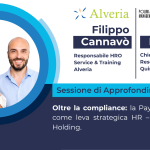
Beyond Compliance: Pay Transparency as a Strategic Lever HR - The Quiris Holding Case
June 9, 2026

June 5, 2026
Succession Planning and Family Pacts: the HR direction of generational transition
he generational transition is no longer an issue that can be postponed. It is already underway, already urgent, already crucial for the survival and development of many businesses, especially family businesses. And yet, just as attention is growing on succession planning tools and models, an increasingly critical issue is emerging: are we really building continuity or are we simply formalising unstructured decisions?
Many companies initiate succession processes without a clear design, relying on implicit logic, family balances or contingent choices. At the same time, legal instruments such as family pacts are often only considered at the final stage, without real alignment with organisational dynamics and HR. The result is a fragmented management, where governance, people and assets do not dialogue with each other.
The point, therefore, is not just succession planning. The point is to design a process that holds together organisational, decision-making and legal dimensions, making it solid, coherent and sustainable over time.
This webinar stems from here: not to simply explain what succession planning or family pacts are, but to understand how to integrate them effectively to make more informed decisions, not just quicker ones.
WHY PARTICIPATE IN THE WEBINAR?
Because today the real challenge is not to deal with the generational transition, but to do so without compromising company equilibrium. Many succession paths fail not for lack of tools, but for lack of integration between strategic vision, people management and legal protection. During the webinar we will work on this junction: how to build a succession process that is structured, readable and governable, avoiding partial solutions or disconnected interventions. We will see how to align the HR plan with the legal instruments, how to reduce decision-making risks and how to make the generational transition not only safer, but also more effective for the future of the company.
WHEN
30 June - 17:00 - 18:00 hours → For registrations write to rsardo@alveria.it by Friday 26 June 2026.
What you will see in detail
During the webinar we will go into how to structure a truly effective succession process, going beyond theoretical logic and focusing on operational tools, decision-making criteria and concrete applications. The aim is to provide a clear and integrated reading that links HR management, corporate governance and legal instruments, avoiding fragmented approaches that often undermine the effectiveness of generational handovers.
Succession Planning: between continuity and decision risk
We will analyse why the generational transition represents one of the most critical moments in the life of a company. It is not just a matter of identifying a successor, but of ensuring strategic continuity, organisational stability and consistency in decisions. We will see how the absence of a structured process can lead to reactive choices, influenced by family dynamics or contingent urgencies, with the risk of generating inefficiencies, internal conflicts and loss of value in the medium to long term. We will also explore what elements make a succession process truly governable: clarity of roles, explicit evaluation criteria and the ability to anticipate future scenarios.
Identification and development of key figures
We will go into how to identify critical resources in a structured manner for the future of the organisation, overcoming intuitive or exclusively hierarchical logics. We will see how to build key role maps and define objective criteria for assessing potential, integrating performance, competencies and capacity for evolution. We will also explore how to design coherent development paths, which prepare people not only to fill a role, but to sustain the decision-making complexity that that role entails, reducing the risk of discontinuity at the time of transition.
Family pacts: legal instrument and strategic lever
We will concretely analyse what family pacts are, how they work and what their operational implications are. Often perceived as exclusively legal tools, we will instead see how they can become a strategic lever if integrated within a broader succession planning design. We will explore when it makes sense to use them, what problems they solve and what risks may emerge if introduced without proper alignment with organisational choices. The aim is to understand how this tool can help reduce conflicts, protect assets and make the generational transition more stable and predictable.
Integration between HR and the legal dimension
One of the main critical points in succession processes is the lack of dialogue between those who manage people and those who manage the legal and property aspects. In this section we will look at how to overcome this separation by building an integrated process in which organisational decisions and legal instruments reinforce each other. We will analyse how to avoid misalignments and how to make choices regarding roles, responsibilities and ownership structures consistent. The aim is to move from isolated interventions to a coordinated decision-making system that is sustainable over time.
Succession Planning HCMS module of Alveria
We will show how all these elements can be translated into practice through a structured platform. We will see how the Succession Planning by HCMS supports the mapping of key roles, the evaluation of resources and the monitoring of development paths. We will explore the value of digitising the process: increased visibility, decision traceability, the possibility to compare scenarios and reduced dependence on informal logics. The aim is to understand how a platform can transform succession planning from an episodic activity into a continuous, governed process.
Live Q&A - Dedicated space for your questions with live answers
SPEAKERS
Filippo Cannavò- Head HRO Service & Training Alveria
WHO IS THE WEBINAR FOR?
The webinar is designed for:
- Entrepreneurs and family businesses
- HR Manager and HR Director
- Personnel managers
- Business, legal and tax consultants
- Managers involved in strategic decision-making processes
YOU MIGHT BE INTERESTED IN
Join the webinar and find out how transform the generational transition from a critical moment to a strategic lever, integrating HR and legal tools to build continuity, stability and value over time.
CONSULTANCY, TRAINING, HR DIGITALIZATION AND CORPORATE SOLUTIONS, DISCOVER THE ALVERIA METHOD. GET READY FOR CHANGE.
The generational transition is no longer an issue that can be postponed. It is already underway, already urgent, already crucial for the survival and development of many businesses, especially family businesses. And yet, just as attention is growing on succession planning tools and models, an increasingly critical issue is emerging: are we really building continuity or are we simply formalising unstructured decisions?
Many companies initiate succession processes without a clear design, relying on implicit logic, family balances or contingent choices. At the same time, legal instruments such as family pacts are often only considered at the final stage, without real alignment with organisational dynamics and HR. The result is a fragmented management, where governance, people and assets do not dialogue with each other.
The point, therefore, is not just succession planning. The point is to design a process that holds together organisational, decision-making and legal dimensions, making it solid, coherent and sustainable over time.
This webinar stems from here: not to simply explain what succession planning or family pacts are, but to understand how to integrate them effectively to make more informed decisions, not just quicker ones.
WHY PARTICIPATE IN THE WEBINAR?
Because today the real challenge is not to deal with the generational transition, but to do so without compromising company equilibrium. Many succession paths fail not for lack of tools, but for lack of integration between strategic vision, people management and legal protection. During the webinar we will work on this junction: how to build a succession process that is structured, readable and governable, avoiding partial solutions or disconnected interventions. We will see how to align the HR plan with the legal instruments, how to reduce decision-making risks and how to make the generational transition not only safer, but also more effective for the future of the company.
WHEN
30 June - 17:00 - 18:00 hours → For registrations write to rsardo@alveria.it by Friday 26 June 2026.
What you will see in detail
During the webinar we will go into how to structure a truly effective succession process, going beyond theoretical logic and focusing on operational tools, decision-making criteria and concrete applications. The aim is to provide a clear and integrated reading that links HR management, corporate governance and legal instruments, avoiding fragmented approaches that often undermine the effectiveness of generational handovers.
Succession Planning: between continuity and decision risk
We will analyse why the generational transition represents one of the most critical moments in the life of a company. It is not just a matter of identifying a successor, but of ensuring strategic continuity, organisational stability and consistency in decisions. We will see how the absence of a structured process can lead to reactive choices, influenced by family dynamics or contingent urgencies, with the risk of generating inefficiencies, internal conflicts and loss of value in the medium to long term. We will also explore what elements make a succession process truly governable: clarity of roles, explicit evaluation criteria and the ability to anticipate future scenarios.
Identification and development of key figures
We will go into how to identify critical resources in a structured manner for the future of the organisation, overcoming intuitive or exclusively hierarchical logics. We will see how to build key role maps and define objective criteria for assessing potential, integrating performance, competencies and capacity for evolution. We will also explore how to design coherent development paths, which prepare people not only to fill a role, but to sustain the decision-making complexity that that role entails, reducing the risk of discontinuity at the time of transition.
Family pacts: legal instrument and strategic lever
We will concretely analyse what family pacts are, how they work and what their operational implications are. Often perceived as exclusively legal tools, we will instead see how they can become a strategic lever if integrated within a broader succession planning design. We will explore when it makes sense to use them, what problems they solve and what risks may emerge if introduced without proper alignment with organisational choices. The aim is to understand how this tool can help reduce conflicts, protect assets and make the generational transition more stable and predictable.
Integration between HR and the legal dimension
One of the main critical points in succession processes is the lack of dialogue between those who manage people and those who manage the legal and property aspects. In this section we will look at how to overcome this separation by building an integrated process in which organisational decisions and legal instruments reinforce each other. We will analyse how to avoid misalignments and how to make choices regarding roles, responsibilities and ownership structures consistent. The aim is to move from isolated interventions to a coordinated decision-making system that is sustainable over time.
Succession Planning HCMS module of Alveria
We will show how all these elements can be translated into practice through a structured platform. We will see how the Succession Planning by HCMS supports the mapping of key roles, the evaluation of resources and the monitoring of development paths. We will explore the value of digitising the process: increased visibility, decision traceability, the possibility to compare scenarios and reduced dependence on informal logics. The aim is to understand how a platform can transform succession planning from an episodic activity into a continuous, governed process.
Live Q&A - Dedicated space for your questions with live answers
SPEAKERS
Filippo Cannavò- Head HRO Service & Training Alveria
Sabrina Sambati - Partners BCA Legal
WHO IS THE WEBINAR FOR?
The webinar is designed for:
- Entrepreneurs and family businesses
- HR Manager and HR Director
- Personnel managers
- Business, legal and tax consultants
- Managers involved in strategic decision-making processes
YOU MIGHT BE INTERESTED IN
Join the webinar and find out how transform the generational transition from a critical moment to a strategic lever, integrating HR and legal tools to build continuity, stability and value over time.