




HR AND AI: THE EVOLUTION THAT PASSES THROUGH HUMAN RESOURCE MANAGEMENT
February 15, 2024
Report of the event "The frontiers of Employee Experience: best practices compared"
February 22, 2024
February 16, 2024
Alveriapress
WHEN THE AI IS AN ALLY FOR HR DIRECTIONS
In recent times, Italian HR departments have faced considerable challenges, highlighting a clear gap between the expectations of candidates/employees and organisational responses. Among the most pressing issues are Talent Shortage and the phenomenon of and the Great Resignation phenomenon . Talent Shortage has made the search for qualified candidates increasingly complex, while Great Resignation has brought to light a significant decline in employee engagement, prompting HR departments to reflect deeply on human resources management.
Increasing difficulties in selecting qualified candidates and decreasing engagement among employees have prompted HR departments to carefully examine the critical issues that have emerged and to engage in the redefinition of relations with resources increasingly geared towards giving work a social as well as an economic meaning. In response to this challenge, in 2024, organisations are called upon not only to recognise, support and exalt merit,but also to equip themselves with the tools needed to make objective decisions, support-oriented decisions, thus guaranteeing a personalised People Experience geared towards tangible support.
The role of AI in a challenging environment
It is undeniable that the advent of Artificial Intelligence has opened up new scenarios for automating work activities, contributing significantly to the efficiency of HR processes, freeing up valuable time for more strategic activities.
AI algorithms are, in fact, already used in various contexts:: from analysing CVs to investigating data on employee performance and well-being, to predicting possible cases of turnover. AI also proves useful in supporting the onboarding process, offering personalised guidance and facilitating the integration of new employees.
However, as is always the case when faced with innovation, it is crucial not to fall into easy exemplification and to maintain a balance between the automation provided by AI and human sensitivity, especially in matters related to people management. Indeed, AI is not meant to replace human skills, but to enhance them, creating a positive impact on society as a whole. To achieve this, organisations are called upon not only to invest in innovation, but also to implement a HR strategy oriented towards upskilling and reskilling of their employees, making them aware of the benefits and potential risks associated with this transformation.
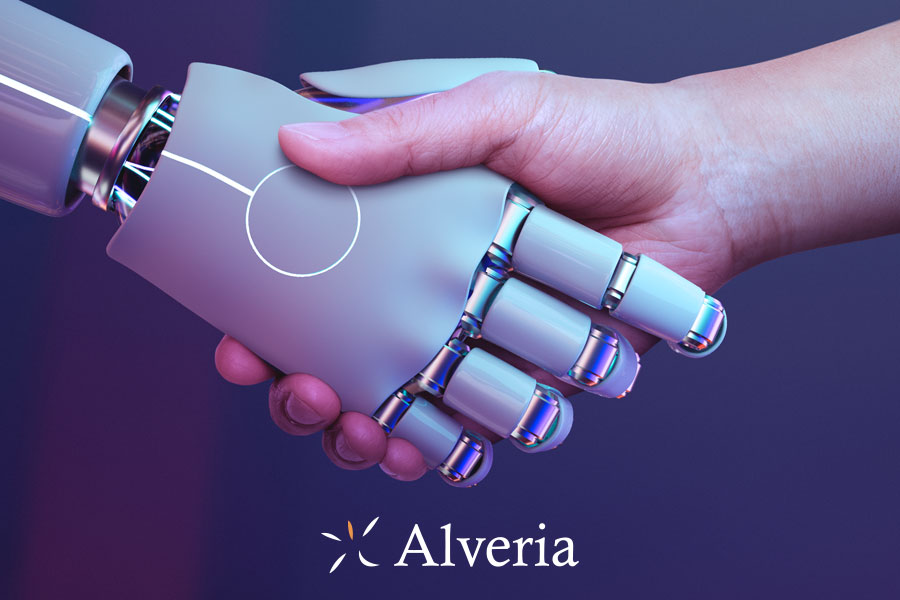
In this transformation process, therefore, the collaboration between human and AI becomes essential, as each contributes in a complementary way to the success of the organisation. Indeed, the advanced data analysis performed by AI allows a deeper insight into business dynamics, while human sensitivity is indispensable in managing interpersonal relationships and understanding emotional and cultural nuances.
For AI to optimally contribute to the strategic goals of HR Directorates, it is also essential to consider ethical and legal aspects. Transparency in the use of data, privacy management and the prevention of algorithmic bias are crucial components of a successful implementation of AI.
The introduction of Artificial Intelligence in human resources management cannot be an end in itself but must serve to enhance human capabilities. Sensitivity, understanding of organisational dynamics and management of interpersonal relations remain indispensable aspects that only human skills can guarantee.
A tool to help HR departments face the challenges of the near future
While the phenomena of Talent Shortage and Great Resignation have highlighted the need for innovative approaches in personnel recruitment and raised the issues of employee engagement and retention, AI lends itself to facilitating selection processes, speeding up response times, and rapidly analysing performance and well-being data by predicting possible turnover cases. This allows HR departments to intervene proactively, implementing targeted retention strategies.
Automating these activities operational through AI, HR departments, in fact, they can concentrate on more strategic tasks such as the definition of company policies oriented towards employee welfare, recognition of merit and skills enhancement.
The combination of Artificial Intelligence and human resources management can therefore be a a catalyst for business success. By embracing this synergy, HR departments can harness the full potential of emerging technologies to build more efficient, inclusive and long-term success-oriented work environments.
Article published by
CONSULTANCY, TRAINING, HR DIGITALIZATION AND CORPORATE SOLUTIONS, DISCOVER THE ALVERIA METHOD. GET READY FOR CHANGE.
In recent times, Italian HR departments have faced considerable challenges, highlighting a clear gap between the expectations of candidates/employees and organisational responses. Among the most pressing issues are Talent Shortage and the phenomenon of and the Great Resignation phenomenon . Talent Shortage has made the search for qualified candidates increasingly complex, while Great Resignation has brought to light a significant decline in employee engagement, prompting HR departments to reflect deeply on human resources management.
Increasing difficulties in selecting qualified candidates and decreasing engagement among employees have prompted HR departments to carefully examine the critical issues that have emerged and to engage in the redefinition of relations with resources increasingly geared towards giving work a social as well as an economic meaning. In response to this challenge, in 2024, organisations are called upon not only to recognise, support and exalt merit,but also to equip themselves with the tools needed to make objective decisions, support-oriented decisions, thus guaranteeing a personalised People Experience geared towards tangible support.
The role of AI in a challenging environment
It is undeniable that the advent of Artificial Intelligence has opened up new scenarios for automating work activities, contributing significantly to the efficiency of HR processes, freeing up valuable time for more strategic activities.
AI algorithms are, in fact, already used in various contexts:: from analysing CVs to investigating data on employee performance and well-being, to predicting possible cases of turnover. AI also proves useful in supporting the onboarding process, offering personalised guidance and facilitating the integration of new employees.
However, as is always the case when faced with innovation, it is crucial not to fall into easy exemplification and to maintain a balance between the automation provided by AI and human sensitivity, especially in matters related to people management. Indeed, AI is not meant to replace human skills, but to enhance them, creating a positive impact on society as a whole. To achieve this, organisations are called upon not only to invest in innovation, but also to implement a HR strategy geared towards upskilling and reskilling their employees, making them aware of the benefits and potential risks associated with this transformation.
In this transformation process, therefore, the collaboration between human and AI becomes essential, as each contributes in a complementary way to the success of the organisation. Indeed, the advanced data analysis performed by AI allows a deeper insight into business dynamics, while human sensitivity is indispensable in managing interpersonal relationships and understanding emotional and cultural nuances.
For AI to optimally contribute to the strategic goals of HR Directorates, it is also essential to consider ethical and legal aspects. Transparency in the use of data, privacy management and the prevention of algorithmic bias are crucial components of a successful implementation of AI.
The introduction of Artificial Intelligence in human resources management cannot be an end in itself but must serve to enhance human capabilities. Sensitivity, understanding of organisational dynamics and management of interpersonal relations remain indispensable aspects that only human skills can guarantee.
A tool to help HR departments face the challenges of the near future
While the phenomena of Talent Shortage and Great Resignation have highlighted the need for innovative approaches in personnel recruitment and raised the issues of employee engagement and retention, AI lends itself to facilitating selection processes, speeding up response times, and rapidly analysing performance and well-being data by predicting possible turnover cases. This allows HR departments to intervene proactively, implementing targeted retention strategies.
Automating these activities operational through AI, HR departments, in fact, they can concentrate on more strategic tasks such as the definition of company policies oriented towards employee welfare, recognition of merit and skills enhancement.
The combination of Artificial Intelligence and human resources management can therefore be a a catalyst for business success. By embracing this synergy, HR departments can harness the full potential of emerging technologies to build more efficient, inclusive and long-term success-oriented work environments.
Article published by
Latest posts
 0Digitalization
HR tools: what are the best ones?
May 12, 2024
 0Human Resources
HR AND AI: THE EVOLUTION THROUGH HUMAN RESOURCES MANAGEMENT
March 20, 2024
 0Human Resources
Frontiers of Employee Experience: comparing best practices
February 22, 2024
Search here
.path{fill:none;stroke-miterlimit:10;stroke-width:1.5px;}
Popular tags
Post
Case study
In person
In presence/online
On Line
CONSULTANCY, TRAINING, HR DIGITALIZATION AND CORPORATE SOLUTIONS, DISCOVER THE ALVERIA METHOD. GET READY FOR CHANGE.